



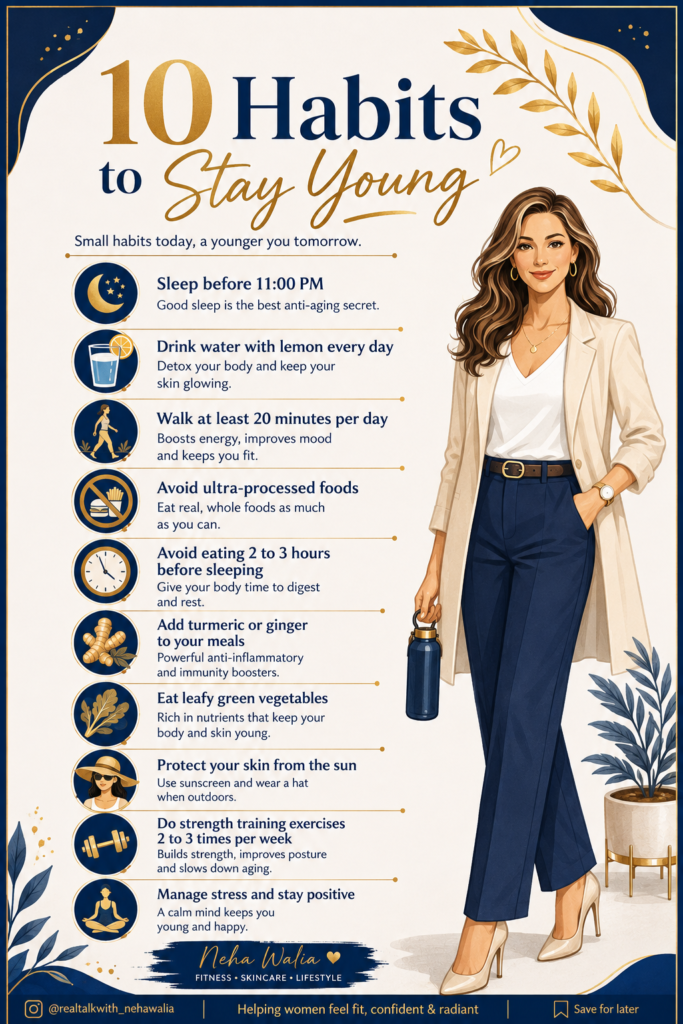
10 Healthy Habits to Stay Young Naturally (2026)
A Complete Anti-Aging Lifestyle Guide
Introduction
Everyone wants to feel energetic, confident, and healthy as the years go by. Although aging is a natural process, our everyday habits have a major influence on how we look and feel. Healthy aging is not about expensive products or miracle treatments. It comes from sleeping well, eating nutritious food, staying active, reducing stress, and making small choices consistently. This guide explains ten practical habits that can support healthy aging, improve overall wellness, and help you enjoy a vibrant life. Each section includes practical tips that are easy to follow and suitable for beginners.
1. Prioritize Quality Sleep
Sleep is one of the most important foundations of good health. During sleep your body repairs tissues, balances hormones, strengthens the immune system, and supports healthy brain function. Poor sleep is linked with fatigue, reduced concentration, low mood, and unhealthy aging. Aim for seven to nine hours of quality sleep every night. Create a relaxing bedtime routine by avoiding screens before bed, limiting caffeine in the evening, and keeping your bedroom cool, quiet, and dark. A consistent sleep schedule helps regulate your body’s internal clock. When you wake up feeling refreshed, you are more likely to make healthier choices throughout the day. Sleep is one of the most important foundations of good health. During sleep your body repairs tissues, balances hormones, strengthens the immune system, and supports healthy brain function. Poor sleep is linked with fatigue, reduced concentration, low mood, and unhealthy aging. Aim for seven to nine hours of quality sleep every night. Create a relaxing bedtime routine by avoiding screens before bed, limiting caffeine in the evening, and keeping your bedroom cool, quiet, and dark. A consistent sleep schedule helps regulate your body’s internal clock. When you wake up feeling refreshed, you are more likely to make healthier choices throughout the day. Sleep is one of the most important foundations of good health. During sleep your body repairs tissues, balances hormones, strengthens the immune system, and supports healthy brain function. Poor sleep is linked with fatigue, reduced concentration, low mood, and unhealthy aging. Aim for seven to nine hours of quality sleep every night. Create a relaxing bedtime routine by avoiding screens before bed, limiting caffeine in the evening, and keeping your bedroom cool, quiet, and dark. A consistent sleep schedule helps regulate your body’s internal clock. When you wake up feeling refreshed, you are more likely to make healthier choices throughout the day. Sleep is one of the most important foundations of good health. During sleep your body repairs tissues, balances hormones, strengthens the immune system, and supports healthy brain function. Poor sleep is linked with fatigue, reduced concentration, low mood, and unhealthy aging. Aim for seven to nine hours of quality sleep every night. Create a relaxing bedtime routine by avoiding screens before bed, limiting caffeine in the evening, and keeping your bedroom cool, quiet, and dark. A consistent sleep schedule helps regulate your body’s internal clock. When you wake up feeling refreshed, you are more likely to make healthier choices throughout the day.
2. Stay Hydrated
Water supports nearly every function in the human body. Proper hydration helps regulate body temperature, transport nutrients, support digestion, lubricate joints, and maintain healthy skin. Begin your morning with a glass of water and continue drinking throughout the day. Carry a reusable water bottle as a reminder. If plain water feels boring, add slices of lemon, cucumber, or mint for flavor without adding sugar. Hydration also supports physical performance and mental focus. Water supports nearly every function in the human body. Proper hydration helps regulate body temperature, transport nutrients, support digestion, lubricate joints, and maintain healthy skin. Begin your morning with a glass of water and continue drinking throughout the day. Carry a reusable water bottle as a reminder. If plain water feels boring, add slices of lemon, cucumber, or mint for flavor without adding sugar. Hydration also supports physical performance and mental focus. Water supports nearly every function in the human body. Proper hydration helps regulate body temperature, transport nutrients, support digestion, lubricate joints, and maintain healthy skin. Begin your morning with a glass of water and continue drinking throughout the day. Carry a reusable water bottle as a reminder. If plain water feels boring, add slices of lemon, cucumber, or mint for flavor without adding sugar. Hydration also supports physical performance and mental focus. Water supports nearly every function in the human body. Proper hydration helps regulate body temperature, transport nutrients, support digestion, lubricate joints, and maintain healthy skin. Begin your morning with a glass of water and continue drinking throughout the day. Carry a reusable water bottle as a reminder. If plain water feels boring, add slices of lemon, cucumber, or mint for flavor without adding sugar. Hydration also supports physical performance and mental focus.
3. Walk Every Day
Walking is a simple and effective exercise that almost everyone can enjoy. A brisk walk for twenty to thirty minutes improves heart health, circulation, mood, and endurance. Walking outdoors can also reduce stress and expose you to fresh air and natural light. If you have a desk job, stand up and move every hour. Consistency matters more than speed. Walking is a simple and effective exercise that almost everyone can enjoy. A brisk walk for twenty to thirty minutes improves heart health, circulation, mood, and endurance. Walking outdoors can also reduce stress and expose you to fresh air and natural light. If you have a desk job, stand up and move every hour. Consistency matters more than speed. Walking is a simple and effective exercise that almost everyone can enjoy. A brisk walk for twenty to thirty minutes improves heart health, circulation, mood, and endurance. Walking outdoors can also reduce stress and expose you to fresh air and natural light. If you have a desk job, stand up and move every hour. Consistency matters more than speed. Walking is a simple and effective exercise that almost everyone can enjoy. A brisk walk for twenty to thirty minutes improves heart health, circulation, mood, and endurance. Walking outdoors can also reduce stress and expose you to fresh air and natural light. If you have a desk job, stand up and move every hour. Consistency matters more than speed.
4. Eat More Whole Foods
Whole foods such as vegetables, fruits, legumes, whole grains, nuts, seeds, and quality protein provide vitamins, minerals, fiber, and antioxidants. These nutrients help protect your cells and support healthy aging. Reduce packaged snacks, sugary drinks, and highly processed meals whenever possible. Plan your meals ahead of time and include colorful vegetables on your plate every day. Whole foods such as vegetables, fruits, legumes, whole grains, nuts, seeds, and quality protein provide vitamins, minerals, fiber, and antioxidants. These nutrients help protect your cells and support healthy aging. Reduce packaged snacks, sugary drinks, and highly processed meals whenever possible. Plan your meals ahead of time and include colorful vegetables on your plate every day. Whole foods such as vegetables, fruits, legumes, whole grains, nuts, seeds, and quality protein provide vitamins, minerals, fiber, and antioxidants. These nutrients help protect your cells and support healthy aging. Reduce packaged snacks, sugary drinks, and highly processed meals whenever possible. Plan your meals ahead of time and include colorful vegetables on your plate every day. Whole foods such as vegetables, fruits, legumes, whole grains, nuts, seeds, and quality protein provide vitamins, minerals, fiber, and antioxidants. These nutrients help protect your cells and support healthy aging. Reduce packaged snacks, sugary drinks, and highly processed meals whenever possible. Plan your meals ahead of time and include colorful vegetables on your plate every day.
5. Avoid Late-Night Eating
Finishing dinner two to three hours before bedtime gives your digestive system enough time to process food before sleep. Many people notice improved sleep quality and less nighttime discomfort when they avoid heavy late meals. Choose lighter evening meals rich in vegetables and protein. Finishing dinner two to three hours before bedtime gives your digestive system enough time to process food before sleep. Many people notice improved sleep quality and less nighttime discomfort when they avoid heavy late meals. Choose lighter evening meals rich in vegetables and protein. Finishing dinner two to three hours before bedtime gives your digestive system enough time to process food before sleep. Many people notice improved sleep quality and less nighttime discomfort when they avoid heavy late meals. Choose lighter evening meals rich in vegetables and protein. Finishing dinner two to three hours before bedtime gives your digestive system enough time to process food before sleep. Many people notice improved sleep quality and less nighttime discomfort when they avoid heavy late meals. Choose lighter evening meals rich in vegetables and protein.
6. Add Turmeric and Ginger
Turmeric and ginger are flavorful ingredients commonly used in healthy cooking. They contain natural plant compounds with antioxidant and anti-inflammatory properties. Add them to soups, curries, herbal teas, smoothies, or stir-fries as part of a balanced diet. Turmeric and ginger are flavorful ingredients commonly used in healthy cooking. They contain natural plant compounds with antioxidant and anti-inflammatory properties. Add them to soups, curries, herbal teas, smoothies, or stir-fries as part of a balanced diet. Turmeric and ginger are flavorful ingredients commonly used in healthy cooking. They contain natural plant compounds with antioxidant and anti-inflammatory properties. Add them to soups, curries, herbal teas, smoothies, or stir-fries as part of a balanced diet. Turmeric and ginger are flavorful ingredients commonly used in healthy cooking. They contain natural plant compounds with antioxidant and anti-inflammatory properties. Add them to soups, curries, herbal teas, smoothies, or stir-fries as part of a balanced diet.
7. Eat Leafy Green Vegetables
Spinach, kale, lettuce, mustard greens, and fenugreek are rich in vitamins, minerals, and fiber. These vegetables support healthy digestion, strong bones, healthy skin, and overall wellness. Aim to include at least one serving of leafy greens every day. Spinach, kale, lettuce, mustard greens, and fenugreek are rich in vitamins, minerals, and fiber. These vegetables support healthy digestion, strong bones, healthy skin, and overall wellness. Aim to include at least one serving of leafy greens every day. Spinach, kale, lettuce, mustard greens, and fenugreek are rich in vitamins, minerals, and fiber. These vegetables support healthy digestion, strong bones, healthy skin, and overall wellness. Aim to include at least one serving of leafy greens every day. Spinach, kale, lettuce, mustard greens, and fenugreek are rich in vitamins, minerals, and fiber. These vegetables support healthy digestion, strong bones, healthy skin, and overall wellness. Aim to include at least one serving of leafy greens every day.
8. Protect Your Skin
Healthy skin starts with daily protection. Apply sunscreen with SPF 30 or higher before going outdoors, wear sunglasses, and seek shade during peak sunlight hours. Cleanse your skin gently and use a moisturizer suitable for your skin type. These habits help maintain healthy-looking skin over time. Healthy skin starts with daily protection. Apply sunscreen with SPF 30 or higher before going outdoors, wear sunglasses, and seek shade during peak sunlight hours. Cleanse your skin gently and use a moisturizer suitable for your skin type. These habits help maintain healthy-looking skin over time. Healthy skin starts with daily protection. Apply sunscreen with SPF 30 or higher before going outdoors, wear sunglasses, and seek shade during peak sunlight hours. Cleanse your skin gently and use a moisturizer suitable for your skin type. These habits help maintain healthy-looking skin over time. Healthy skin starts with daily protection. Apply sunscreen with SPF 30 or higher before going outdoors, wear sunglasses, and seek shade during peak sunlight hours. Cleanse your skin gently and use a moisturizer suitable for your skin type. These habits help maintain healthy-looking skin over time.
9. Build Strength
Strength training preserves muscle mass, supports bone health, improves posture, and boosts metabolism. Beginners can start with bodyweight exercises such as squats, push-ups, lunges, planks, and glute bridges. Two or three sessions each week can make a meaningful difference. Strength training preserves muscle mass, supports bone health, improves posture, and boosts metabolism. Beginners can start with bodyweight exercises such as squats, push-ups, lunges, planks, and glute bridges. Two or three sessions each week can make a meaningful difference. Strength training preserves muscle mass, supports bone health, improves posture, and boosts metabolism. Beginners can start with bodyweight exercises such as squats, push-ups, lunges, planks, and glute bridges. Two or three sessions each week can make a meaningful difference. Strength training preserves muscle mass, supports bone health, improves posture, and boosts metabolism. Beginners can start with bodyweight exercises such as squats, push-ups, lunges, planks, and glute bridges. Two or three sessions each week can make a meaningful difference.
10. Manage Stress
Long-term stress affects sleep, digestion, energy, mood, and overall wellbeing. Develop healthy stress-management habits such as deep breathing, meditation, yoga, journaling, reading, listening to music, or spending time with family and friends. Even ten minutes of relaxation each day can improve resilience. Long-term stress affects sleep, digestion, energy, mood, and overall wellbeing. Develop healthy stress-management habits such as deep breathing, meditation, yoga, journaling, reading, listening to music, or spending time with family and friends. Even ten minutes of relaxation each day can improve resilience. Long-term stress affects sleep, digestion, energy, mood, and overall wellbeing. Develop healthy stress-management habits such as deep breathing, meditation, yoga, journaling, reading, listening to music, or spending time with family and friends. Even ten minutes of relaxation each day can improve resilience. Long-term stress affects sleep, digestion, energy, mood, and overall wellbeing. Develop healthy stress-management habits such as deep breathing, meditation, yoga, journaling, reading, listening to music, or spending time with family and friends. Even ten minutes of relaxation each day can improve resilience.
Frequently Asked Questions
Can healthy habits stop aging? No, but they can support better health, energy, and quality of life. How much exercise should adults do? Aim for at least 150 minutes of moderate activity per week plus strength training twice weekly. Is lemon water required? No, plain water is equally effective for hydration. What foods are best for healthy aging? A balanced diet rich in vegetables, fruits, whole grains, legumes, nuts, seeds, and protein is an excellent foundation.
Final Thoughts Healthy aging is a lifelong journey built on consistent daily choices. Every healthy meal, every walk, every good night’s sleep, and every moment spent managing stress contributes to your future wellbeing. Instead of trying to change everything at once, choose one habit from this guide and practice it every day. Once it becomes part of your routine, add another habit. Over time these small actions create remarkable results. Remember that true wellness is about feeling strong, energetic, and confident—not chasing perfection. Invest in your health today and your future self will thank you.