



Best Sleeping Positions for Pain Relief: A Complete Guide to Better Sleep and a Healthier Body
Meta Title: Best Sleeping Positions for Pain Relief | Improve Sleep & Reduce Back, Neck & Shoulder Pain
Meta Description: Discover the best sleeping positions for shoulder pain, neck pain, lower back pain, sciatica, sinus congestion, headaches, and knee pain. Learn expert sleep tips for better rest and pain relief.
Best Sleeping Positions for Pain Relief: Sleep Better, Wake Up Refreshed
Have you ever woken up with a stiff neck, aching back, sore shoulders, or throbbing headaches despite getting a full night’s sleep? If so, your sleeping position could be one of the biggest reasons.
Many people focus on buying an expensive mattress or pillow but overlook the importance of proper sleeping posture. The way you position your body during sleep affects your spine, muscles, joints, and even your breathing. Poor sleeping habits can place unnecessary pressure on sensitive areas, leading to pain, stiffness, and poor-quality sleep.
The good news is that making a few simple adjustments to your sleeping position can significantly improve your comfort. Supporting your body with the right pillows and maintaining natural spinal alignment can reduce pressure on painful areas, improve circulation, and help you wake up feeling refreshed instead of sore.
In this guide, you’ll learn the best sleeping positions for common pain conditions, practical tips to improve sleep quality, and lifestyle habits that support long-term pain relief.
Why Sleeping Position Matters
While you sleep, your body repairs muscles, restores energy, and supports overall recovery. If your spine is misaligned for several hours, it can strain muscles and ligaments, compress nerves, and increase joint discomfort.
A healthy sleeping position should:
- Keep the spine in a neutral position.
- Reduce pressure on joints and muscles.
- Support the natural curve of the neck and lower back.
- Promote healthy blood circulation.
- Help you breathe comfortably.
When your body is properly supported, your muscles can fully relax, allowing you to sleep more deeply and wake up with less pain.
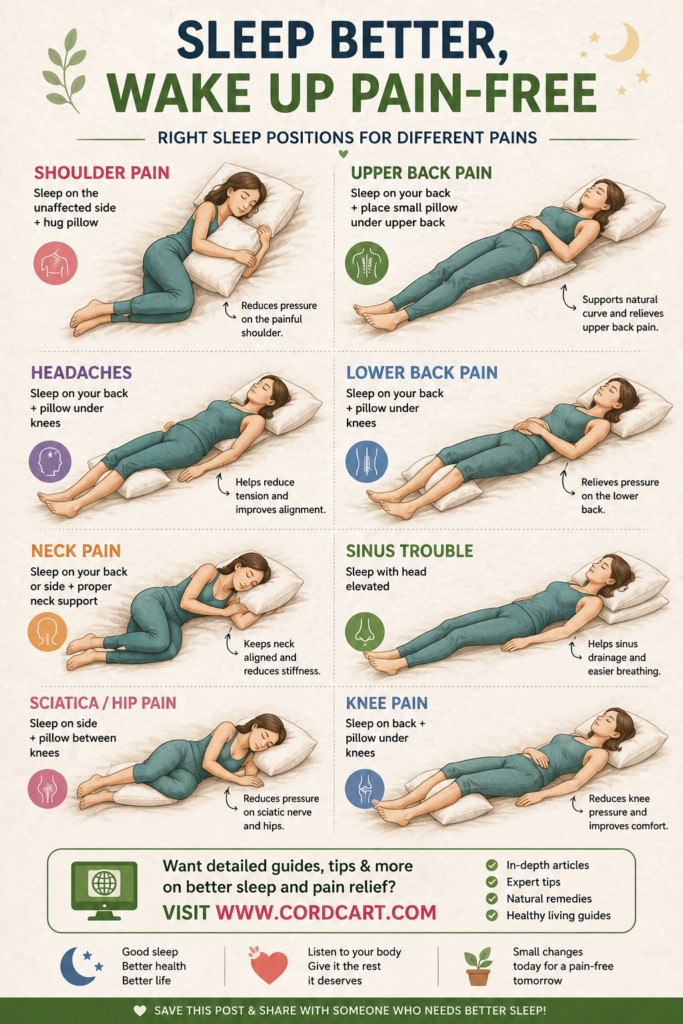
Best Sleeping Position for Shoulder Pain
Shoulder pain is one of the most common complaints among side sleepers. Sleeping directly on a painful shoulder places continuous pressure on the joint, which may worsen inflammation and discomfort.
Recommended Position
Sleep on the opposite, pain-free side.
Place a soft pillow between your arms or hug a pillow against your chest. This supports your shoulder and prevents it from rolling forward during the night.
Additional Tips
- Choose a medium-firm pillow to keep your neck aligned.
- Avoid sleeping with your arm underneath your body.
- If both shoulders hurt, try sleeping on your back instead.
Best Sleeping Position for Upper Back Pain
Upper back pain often develops because of poor posture during the day, muscle tension, or sleeping with inadequate support.
Recommended Position
Sleep on your back with a small pillow or rolled towel placed under the upper back if recommended by your healthcare provider. Your regular pillow should comfortably support your neck without pushing your head too far forward.
Benefits
- Helps maintain natural spinal alignment.
- Reduces muscle tension.
- Minimizes stress on the upper back and shoulders.
Best Sleeping Position for Headaches
Some headaches are linked to neck strain and poor sleeping posture. Supporting your spine correctly may help reduce tension-related headaches.
Recommended Position
Sleep on your back with a pillow under your knees.
This simple adjustment helps maintain the natural curve of your lower back, allowing your entire spine—including your neck—to relax.
Extra Tips
- Stay hydrated throughout the day.
- Avoid caffeine close to bedtime.
- Keep your bedroom cool, dark, and quiet.
Best Sleeping Position for Lower Back Pain
Lower back pain affects millions of people and can interfere with daily activities. Sleeping incorrectly often makes the pain worse.
Recommended Position
Sleep on your back with a pillow placed underneath your knees.
The pillow slightly bends your knees, reducing pressure on your lower back while helping your spine maintain its natural position.
Alternative Option
If you’re a side sleeper, place a pillow between your knees. This keeps your hips level and reduces twisting of the lower spine.
Benefits
- Less pressure on spinal discs.
- Improved alignment.
- Better muscle relaxation.
- Reduced morning stiffness.
Best Sleeping Position for Neck Pain
Your neck supports the weight of your head all night, so proper support is essential.
The best sleeping position is on your back or side with a pillow that fills the space between your neck and mattress without forcing your head too high or too low.
Avoid sleeping on your stomach whenever possible, as it requires your neck to remain twisted for long periods.
Best Sleeping Position for Sinus Congestion
If you’ve ever struggled to sleep with a blocked nose or sinus pressure, you know how frustrating it can be. Lying completely flat allows mucus to collect in the nasal passages, making breathing more difficult.
Recommended Position
Sleep on your back with your head elevated using one or two pillows or an adjustable bed. Raising your head by about 30–45 degrees helps mucus drain naturally and reduces pressure in the sinuses.
Additional Tips
Use a saline nasal spray before bedtime.
Drink plenty of water throughout the day.
Run a humidifier if the air in your bedroom is dry.
Avoid smoking and strong fragrances before bed.
Best Sleeping Position for Sciatica and Hip Pain
Sciatica causes pain that travels from the lower back down the leg because of irritation or compression of the sciatic nerve. Hip pain can also become worse if pressure is placed directly on the affected side.
Recommended Position
Sleep on your side with a firm pillow placed between your knees. This keeps your hips, pelvis, and spine aligned while reducing pressure on the sciatic nerve.
If you prefer sleeping on your back, place a pillow beneath your knees to support the natural curve of your lower back.
Benefits
Reduces pressure on the hips.
Keeps the pelvis aligned.
Relieves stress on the sciatic nerve.
Improves comfort during the night.
Best Sleeping Position for Knee Pain
People with arthritis, ligament injuries, or general knee pain often wake up feeling stiff because of poor sleeping posture.
Recommended Position
Sleep on your back with a pillow under your knees. This slightly bends the knees and reduces tension on the surrounding muscles and ligaments.
If you sleep on your side, place a pillow between your knees to keep them aligned and prevent one knee from pressing against the other.
Choosing the Right Pillow
Even the best sleeping position won’t help if your pillow doesn’t support your neck properly.
Back Sleepers
Choose a medium-height pillow that supports the natural curve of your neck without pushing your head forward.
Side Sleepers
Use a thicker pillow that fills the gap between your shoulder and head, keeping your neck straight.
Stomach Sleepers
If you cannot avoid sleeping on your stomach, choose a very thin pillow or sleep without one to reduce neck strain.
Choosing the Right Mattress
A supportive mattress plays a major role in reducing pain.
Medium-Firm Mattresses
Most experts recommend a medium-firm mattress because it supports the spine while still providing comfort for pressure points.
Replace your mattress every 7–10 years or sooner if it has visible sagging or causes discomfort.
Common Sleeping Mistakes
Many people unknowingly make simple mistakes that contribute to pain.
Avoid these habits:
Sleeping on your stomach every night.
Using pillows that are too high or too flat.
Sleeping on an old, sagging mattress.
Looking at your phone immediately before bed.
Drinking excessive caffeine late in the evening.
Sleeping in the same uncomfortable position for the entire night.
Making even one or two improvements can significantly enhance your sleep quality.
Lifestyle Habits That Improve Sleep
Good sleep isn’t just about posture. Daily habits also influence how well you rest.
Exercise Regularly
Aim for at least 30 minutes of moderate exercise most days of the week. Walking, yoga, swimming, and strength training all help improve sleep quality.
Maintain a Healthy Weight
Excess body weight can place additional pressure on the spine and joints while sleeping.
Stretch Before Bed
Gentle stretching relaxes tight muscles and improves flexibility, reducing stiffness the following morning.
Stay Hydrated
Dehydration can contribute to muscle cramps and discomfort during the night. Drink enough water during the day, but reduce large amounts close to bedtime.
Create a Sleep Routine
Go to bed and wake up at the same time every day—even on weekends. Consistency helps regulate your body’s natural sleep cycle.
Signs You Should See a Doctor
While changing your sleeping position may reduce discomfort, persistent pain should not be ignored.
Consult a healthcare professional if you experience:
Pain lasting longer than a few weeks.
Numbness or tingling in the arms or legs.
Severe pain that interrupts sleep every night.
Difficulty walking.
Loss of bladder or bowel control.
Fever with back pain.
Pain following a serious injury.
Frequently Asked Questions
Is sleeping on your back the healthiest position?
For many people, yes. Sleeping on your back helps keep the spine in a neutral position and evenly distributes body weight. However, people with sleep apnea or frequent snoring may find side sleeping more comfortable.
Can my pillow cause neck pain?
Yes. A pillow that is too high, too low, or lacks proper support can strain the neck muscles and lead to stiffness.
Should I sleep without a pillow?
Most people benefit from using a pillow that supports the natural alignment of the neck. Sleeping without one is generally recommended only for certain stomach sleepers.
How many hours of sleep do adults need?
Most healthy adults should aim for 7–9 hours of quality sleep every night.
Can changing my sleeping position relieve back pain?
For many people, yes. Maintaining proper spinal alignment and using supportive pillows can reduce pressure on the back and improve comfort.
Which mattress is best for back pain?
A medium-firm mattress is often recommended because it balances support and comfort. The ideal choice depends on your body type and personal preferences.
Is side sleeping good for everyone?
Side sleeping is beneficial for many people, especially those with shoulder pain, sciatica, or sleep apnea. Use a pillow between your knees to keep your spine aligned.
Does sleeping with a pillow under the knees help?
Yes. For back sleepers, placing a pillow under the knees reduces pressure on the lower back and helps maintain the spine’s natural curve.
Final Thoughts
Quality sleep is one of the most important pillars of good health. While medication and therapy may sometimes be necessary, something as simple as changing your sleeping position can make a noticeable difference in your comfort and recovery.
Remember that there is no single “perfect” sleeping position for everyone. The best choice depends on your body, your health conditions, and what feels most comfortable while keeping your spine properly aligned.
If your pain persists despite improving your sleeping posture, don’t hesitate to seek medical advice. Early treatment can prevent minor issues from becoming long-term problems.
Start with small changes tonight—use the right pillow, support your knees or hips when needed, and create a relaxing bedtime routine. Over time, these simple habits can help you enjoy deeper sleep, less pain, and more energy throughout the day.
Conclusion
Better sleep begins with better posture. Whether you’re dealing with shoulder pain, lower back pain, neck stiffness, headaches, sinus congestion, or sciatica, choosing the right sleeping position can reduce pressure on sensitive areas and improve overall sleep quality.
At CordCart, we believe that lasting wellness comes from simple, sustainable habits. Explore more expert guides on healthy living, fitness, nutrition, and pain management to support your journey toward a healthier, more active life.